Home Loan Down Payment 2026: You DON'T Need 20% — Here's What Banks Actually Accept
Stop waiting to save 20%. CA Praphul Purohit explains why 10-15% is the 2026 standard for Indian home loans and how to find 5% down payment schemes.
 CA PRAPHUL PUROHIT
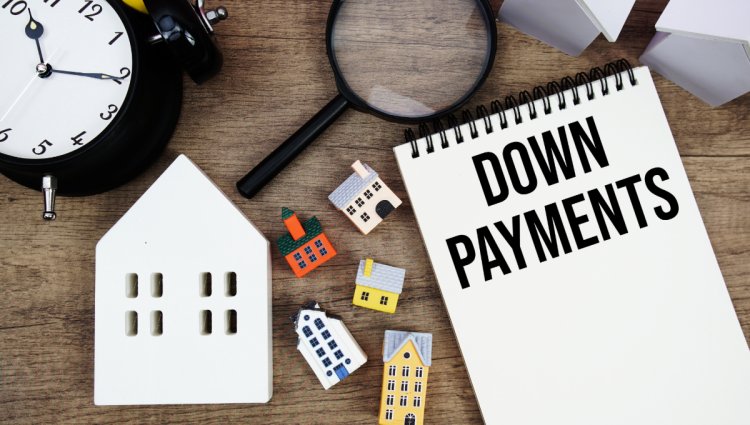

Many Indian families stay in rented homes for years because they believe a big lie. They think they need to save a massive pile of cash at least 20% or 25% of the house price before they can even talk to a bank. This fear stops people from even trying to buy their dream home.
Quote: In 2026, you do not need a mountain of gold to start. Most buyers only need 10% to 15% upfront, and some can get a key with just 5% cash in hand.

Big Mistake Indian Home Buyer's Make
I see this every day in my practice. A young couple wants a house worth ₹60 Lakh. They think they must save ₹12 Lakh (20%) for the down payment. While they spend three years saving that money, the house price jumps to ₹75 Lakh. They are chasing a target that keeps moving away.
Waiting too long is a trap. The reality of Indian banking today is much friendlier than you think. Banks are hungry to lend to honest earners. If you have a stable job and a good credit score, the bank is happy to be your partner, not just a strict principal.
How much down payment is standard in 2026?
Think of the down payment like an entry ticket to a cricket match. The bank pays for your seat, but you must pay for the ticket to show you are serious. In the current March 2026 market, here is the breakdown:
- For loans up to ₹30 Lakh: You only need 10% down payment. The bank gives you 90%.
- For loans between ₹30 Lakh and ₹75 Lakh: You usually need 20% down payment. The bank gives 80%.
- For luxury homes above ₹75 Lakh: You need 25% down payment. The bank gives 75%.
However, these are just the basic rules. Many banks now offer special packages where they count your stamp duty and registration costs differently, effectively lowering your cash burden.
Can you really buy a house with just 5% down?
Yes, it is possible, but you have to look in the right places. Many developers in growing cities like Pune, Bengaluru, and Noida are now offering 5:95 schemes. This means you pay 5% now, and the bank handles the rest until the house is ready.
Also, if you are looking at affordable housing projects under state government schemes, the margin money (that is the fancy word for down payment) is often kept at 5% to help first-time buyers. I recently helped a client, Suresh, who bought a ₹40 Lakh flat with just ₹2 Lakh in savings. We found a lender who was comfortable with a 5% margin because Suresh had a high credit score of 800+.
Real Life Scenario: The Cost of Waiting
Let us look at Rahul and Priya. House Price: ₹50 Lakh. Rahul wants to save 20% (₹10 Lakh). He saves ₹2 Lakh a year. It will take him 5 years. Priya decides to use a 10% scheme (₹5 Lakh). She buys the house today. By the time Rahul saves his ₹10 Lakh in 2031, that same house will likely cost ₹70 Lakh. He will still be short of money! Priya, on the other hand, already owns a house that is growing in value.
Common Mistakes to Avoid
- Forgetting extra costs: You need extra cash for stamp duty and registration. Do not finish all your savings on the down payment.
- Taking a personal loan for down payment: This is a huge red flag for banks. It lowers your ability to pay the main home loan.
- Ignoring the LTV: LTV stands for Loan-to-Value. If the bank says 80% LTV, it means they pay 80% of what THEIR valuer says the house is worth, not necessarily what the builder is asking for.
Your Action Plan for 2026
Check your credit score first. If it is above 750, you can negotiate for a lower down payment. Look for projects with PMAY linked benefits or state-specific first-time buyer perks. Calculate your budget including the 10-15% down payment plus 7% for taxes.
At Quick Home Loan, we believe that education is the first step to owning a roof. We do not just show you numbers; we show you the path. Most people do not need more money; they just need better guidance on how to use what they already have. Transparency is rare in loans, but we make it simple.
Ready to see what you actually need? Let us find the right path for your home journey today.
Frequently Asked Questions
Q1. Is 20% down payment mandatory in India in 2026?
No, it is not mandatory. While 20% is a safe traditional figure, RBI guidelines allow banks to fund up to 90% for loans below ₹30 Lakh,
meaning you only need a 10% down payment.
Q2. Can I use my EPF for a home loan down payment?
Yes, you can withdraw up to 90% of your accumulated EPF balance for the purchase or construction of a house,
which is a great way to cover your down payment without touching your liquid savings.
Q3. Does a higher down payment reduce my interest rate?
Sometimes. If you pay more upfront, the bank sees you as a low-risk borrower and might offer you a slightly lower interest rate,
often called a risk-spread discount.
Q4.Do I need extra cash apart from the down payment?
Yes. You should keep about 7% to 10% of the property value aside for stamp duty, registration fees, and legal charges,
as most banks do not include these in the loan amount.