
Increase Credit Score for Indian Home Loans: 7 Smart Strategies
Improve your credit score for a cheaper home loan rate in India. Discover 7 practical methods to boost your CIBIL score and save lakhs on interest.
 CA PRAPHUL PUROHIT
"To boost your credit score fast, pay off credit card balances, maintain a credit utilization ratio below 30 percent, correct CIBIL report errors, and limit fresh loan inquiries. A score of 750 or above helps you secure the lowest home loan interest rates, saving you lakhs over your loan tenure."
Many buyers believe a high monthly salary guarantees a home loan. This is false. Banks care more about how you handle debt than how much you earn. Let us break down how your credit history controls your financial destiny.
The RBI Connection and Your Money
The Reserve Bank of India (RBI) maintains the active repo rate at 5.25 percent, according to the official RBI website (rbi.org.in). Banks tie their lending rates directly to this benchmark. However, your individual interest rate depends heavily on your credit score. A low score means banks classify you as high risk, charging you higher interest. Let us look at how you can change this
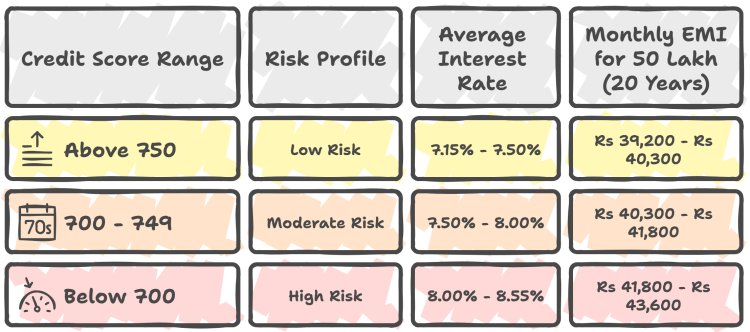
Let us break down the math. A higher score directly translates to a lower rate. Here are seven ways to build a strong credit profile.
1. Wipe Out Errors on Your Credit Report
Credit bureaus make mistakes. A wrongly reported delayed payment can pull your score down. Download your credit report from CIBIL or Experian. Check for incorrect account balances or active loans you already paid off. File a dispute online immediately to correct these mistakes.
2. Keep Your Credit Card Utilization Below 30 Percent
Do you swipe your credit card up to its limit every month? This makes you look hungry for credit. Keep your total spending below 30 percent of your available credit limit. For example, if your card limit is 1 Lakh rupees, do not spend more than 30,000 rupees in a month.
3. Do Not Close Your Oldest Credit Cards
Your credit age matters. A long history of clean repayments proves you manage debt well. Keep your oldest credit card active. Even if you do not use it often, make a small purchase occasionally and pay it off.
4. Automate Your Monthly EMI Payments
A single missed EMI or credit card payment can damage your score for months. Set up automated standing instructions on your bank account. This guarantees you pay every bill on time.
5. Mix Your Debt Smartly
Lenders like to see that you can handle different types of debt. A healthy mix of secured loans, like a car loan, and unsecured debt, like a credit card, builds a stronger profile. Do not take personal loans just to build a mix, but balance what you already have.
6. Stop Applying for Multiple Loans Simultaneously
Every time you apply for a loan or a credit card, the lender makes a hard inquiry on your report. Too many hard inquiries in a short period flag you as a high-risk borrower. Space out your applications.
7. Monitor Co-Signed Loans Diligently
If you co-signed a loan for a friend or relative, you are equally responsible. If they miss a payment, your credit score drops too. Track these loans monthly to protect your financial health.
How Amit Saved 9 Lakh Rupees on a 50 Lakh Loan
Let us look at a real example. Amit wanted a 50 Lakh home loan for 20 years. Because his credit score was 640, the bank offered him a rate of 8.55 percent. His EMI was 43,541 rupees.
Amit decided to wait. He spent six months cleaning his report and keeping credit utilization low. His score rose to 785. The bank then offered him an active rate of 7.25 percent.
His monthly EMI fell to 39,519 rupees. He saved 4,022 rupees every single month. Over 20 years, Amit saved 9.65 Lakh rupees in total interest.
Key Points & Takeaways:
- Keep your credit card utilization below 30 percent to protect your score.
- A credit score above 750 unlocks interest rates as low as 7.15 percent.
- Avoid making multiple loan applications in a short period to prevent hard inquiries.
- Maintain a healthy budget where home loan EMIs do not exceed 40 percent of take-home pay.
Balance Your Household Budget
Buying a home is an emotional step. But you must protect your family cash flow. Never let your total home loan EMI exceed 40 percent of your net take-home salary. Keep a strong emergency fund with six months of living expenses ready before you sign the loan papers. This fund protects your credit score if you face job loss or medical issues.
At QuickHome Loan, we help you prepare for this big financial step. Our team guides you to clean up your credit profile before you apply so you get the best deal.